How I Quit Smoking

I have been smoking for half my life.  And it’s no wonder that I took it up.  I grew up with it.  My mom smoked in the house, in the car, in bed.  She would write a note and send me to pick up cigarettes for her at the corner store….

My Influences.

What authors do I consider to be my influences?  I’ve given it a lot of thought.  These are the one’s that grabbed me by the brain as a child, and as a young adult, and have yet to let go.  They have shaped my thinking, my perception of …

Entanglement and Connectedness

The latest researches in Quantum Theory show that the world is not quite as simple as we like to think. First of all, it appears that the so-called superposition of states doesn’t just apply to the microscopic and atomic levels, but also at the macroscopic levels we see and experience every day. This is the […]

On Originality

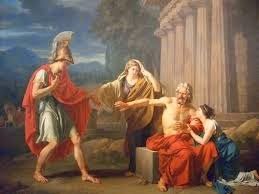
Qedipus at ColonnusSome say originality in fiction is no longer possible.  When did this happen?  When did we exhaust the creative potential of humanity to tell new stories? Did originality begin and end with the ancients, and has everything …

A metaphysical interview with Toronto city councillor Doug Ford

This afternoon I had the opportunity for a metaphysical interview with Doug Ford, Toronto city councillor and brother to the mayor, Rob Ford. You’ve probably heard of Rob Ford: his pro-taxpayer, anti-downtown-fatcat policies have been featured in news media all over the world, and Youtube is full of amateur videos of his impromptu political speeches.

You probably haven’t heard of a metaphysical interview. This is like a regular interview, but instead of talking to the person you speculate about what they might say. It made my office hours today a bit awkward:

Student: Can I talk to you about my essay?

Me: I’m not here. I’m in Toronto conducting an interview.

Student: If I drop your class now, can I still get my money back?

Anyway, I met with Councillor Ford on the driveway of his lovely Rexdale home. “I wanted to ask you,” I began, “about your comments on the Griffin Centre group home near here. You were quoted as saying that it ‘ruined the neighbourhood’.”

“It did,” the councillor replied. “We have autistic people – not children, but teenagers and adults – who are disturbing the peace, screaming at night and wandering around. We have police and ambulances showing up. It’s hurting property values.”

“But, Mr. Ford,” I said, “isn’t that insensitive? I mean, we don’t want to exclude people from the community just because they have developmental challenges.”

“I feel just as much for autistic kids as the next guy,” he said, and put his hand on his heart to prove it. “But this used to be a quiet, well-kept neighbourhood – neat and tidy, filled with respectable, hardworking people. Having people here with these problems ruins all that. Would you want to live next door to someone who’s wandering around, screaming incoherently, and – ”
What he said next was drowned out by the sound of retching. At the end of a neighbouring house’s driveway, a enormously fat man vomited into a recycling bin. He stood up, wiped his mouth, and took a swig from a half-empty forty of Smirnoff. Then he staggered towards us. Doug Ford was still talking, but I couldn’t tear my eyes from the spectacle. The bulbous man wore an untucked dress shirt and tie, both spattered with bile. One of his shoes was missing. He glared at me with bloodshot eyes and growled, “What are you staring at?”

“I’m not sure,” I replied.

The fat man waved his bottle in the air and shouted, “I’m the mayor! Who the fuck are you?”

Before I could answer, he launched into a rambling speech in a fake accent. I certainly couldn’t understand enough to relate what he said, but I think I can summarize it thus:

Rob Ford’s Jamaican-style Jerk Sauce

Ingredients
1 anecdote
½ dozen swear words
3 cups of mock humility, badly faked
1 painfully embarrassing ethnic stereotype
Combine all ingredients and bring to a low boil. Slur until thoroughly mixed up. Serve while waving arms around as if fighting invisible ninjas.

The mayor then bellowed “WHAT’S UP?” and tried to slap his brother on the shoulder, but missed and nearly toppled over.

“Having a good time?” said Doug.

“Fuck yeah!” shouted the mayor, and took another drink, missing his lips and dribbling enough vodka down his shirt to make him a fire hazard.

“So, Rob,” said Doug very calmly, “I’m giving an interview here.”

The mayor jabbed me in the chest with his finger. “Bill Blair is a fucking asshole. And if you quote me on that I’ll ram my knee up your ass. No, fuck that. My knee is wider than your ass. How do you even sit down on that bony thing? You look like you’re fucking made of paper clips.” He wiggled the bottle. “Want a drink, bro?”

“No, thanks,” I replied. “I’m driving.”

“So was I until that tree cut me off.” He looked over his shoulder and yelled, “GET OFF THE ROAD, YOU LEAFY BITCH!”

I worried for a minute about offending someone that large and intoxicated, but even a metaphysical interviewer has to take some risks. “Mr. Ford, I thought you were in rehab.”

“Fuck rehab!” he shouted, and launched into an Amy Winehouse rendition. He aimed for the tune the way a fleet of B-52s would, destroying every note in a two-mile radius of the ones in the song. As he caterwauled he began to wander towards the house.

“My brother’s getting help for his substance abuse problems,” said Doug.

“I don’t have a drinking problem!” the mayor shouted. “I have a liberal media cocksuckers problem. I have a Bill Blair is a dickhead problem.”

“He’s making great progress,” said Doug. “He should be back to work in a couple weeks.”

“Taking care of business!” the mayor sang, so off-key that Randy Bachman could have sued him for slander. Lurching back and forth like a buoy in a hurricane, he managed to extricate a pipe from his pants pocket.

My eyes widened. “Is that a crack pipe?”

“No,” said Doug. “It’s a, um, kazoo.”

The mayor teetered back and forth, trying to get his lighter lit, the flame over the end of the pipe, and inhale, all at the same time. It was clearly a bit complicated for him.

“He’s smoking crack.” I turned to Doug. “He’s smoking crack on your driveway.”

“Technically, no,” Doug replied. “He’s got the pipe upside down.”

“He’s trying to smoke crack and failing. That’s even worse.”

“This stuff is shit!” the mayor yelled. “I want my five bucks back!” He threw the pipe in a hedge, then drained the bottle of vodka and tossed it too, laughing when it shattered against the neighbours’ car. “I’m gonna get another drunk,” said the mayor, and staggered up to his brother’s front door, where he stood swearing profusely and trying to figure out how to work the doorknob.

 “So,” I said to Councillor Ford, “where were we?”

“We were talking about respectable neighbourhoods,” he said. “About how people need to live in quiet, well-kept places, with good, hardworking people, and how group homes for autistic people ruin the property values.”

“Ah, yes,” I replied. “That’s where we were.”

Return to Ukraine

I’d hoped to make it back to Ukraine for another metaphysical interview for a while now, but with my work schedule it just hasn’t been possible. It takes time, you know, speculating about a transatlantic flight. Finally, while doing laundry this afternoon I managed to get back to Kramatorsk, in the self-declared sovereign state that used to be the province of Donetsk.

Looking one way down the street, it seemed like a normal afternoon. People strolled and chatted and shopped. A pair of old men played chess outside a café. A grocer argued with a heavyset woman who was waving around a beet that had apparently offended her. But just twenty yards away, the street was cut off by a barricade of sandbags and cinderblocks. Soldiers lolled in the sun or rested in the shade cast by an armoured personnel carrier parked on the sidewalk. They still wore uniforms that looked oddly like Russian ones, but they had patches freshly sewn on their shoulders that read Donetsk People’s Republic.

“Greetings, Dr. Lipak!” Pavel Aleksandrov strode over to me, a rifle slung over his shoulder, followed by two of his men – who I think were both named Ivan. They stopped a few feet away and saluted me. Pavel’s eyes fell for an instant, and then he said, “Welcome back to Kramatorsk!”

“Pavel,” I sighed, “I can see that you wrote the name of the town on your hand.”

“I had it tattooed there. Because I love my hometown so much.”

“Let’s not go there again.” I pointed to the insigne on his shoulder. “So you’re in the Donetsk army now?”

“Yes,” said Pavel. “In our referendum the people of Donetsk overwhelmingly voted to become a sovereign state. And a sovereign state needs an army, so as a patriot who loves his region, I felt obliged to join up.”

“Right.”

“Of course, we may not remain independent forever. We might, for instance, vote to join Russia someday. But who knows what the future will hold?” He raised his hands and glanced upward as if to say ‘only God,’ though I suspected that He wasn’t the one who would make the decision.

“I wanted to ask you about that referendum,” I said.

“It showed overwhelming support in favour of sovereignty. 89% in favour.”

“That certainly sounds good,” I replied, “though according to pollsters, support for independence is only around ten or fifteen percent. Little odd, that. Anyway, what was the turnout for the referendum?”

“103%.”

There ensued an awkward silence.

“We asked the people of Donetsk to give 110%,” said Pavel, “but they did not. They only gave 103%.”

“Yeah – um.” I took off my glasses, then put them back on. “Okay, you do realize that giving 110% is a sports metaphor and not actually possible?”

“Well, maybe for your apathetic voters.”

“No, I mean it’s literally impossible. You cannot have more than 100% of the voters turn out.”

“It’s not impossible. Only challenging.”

“You can’t have more votes than you have voters.”

Pavel just looked at me, his face impassive except for a polite half-smile; but one of the Ivans said, “Why not?”

“Why not? You’d have people voting more than once.”

“But of course!” said Ivan.

I gave him a second, then said, “You meant, ‘of course they don’t vote more than once,’ right?”

“If someone feels strongly about Donetsk’s sovereignty,” said Pavel, “they should be able to express the depth of their patriotic sentiment. Sometimes one vote just isn’t enough to capture how much a man loves his region.”

“Okay,” I said. “And if they’re strongly against sovereignty?”

“Then they can express their views in the privacy of their own homes.”

I shook my head. “Guys, this is why no one’s going to take this vote seriously. If you want to hold a referendum, you need to do it properly, with international monitors to certify that it was free and fair.”

Pavel sighed. “All that trouble we went to,” he muttered. Then he grinned. “You’re international! We’ll hold the referendum again, and you can monitor it.”

“I guess,” I said.

“Wonderful! Then we vote again.” Pavel took a little spiral notebook and a stubby pencil out of his breast pocket, and turned to the Ivans. “You?”

The two said, “Yes,” at once, and one of them quickly added, “Jinx. You owe me bottle of vodka.”

Pavel mumbled, “Me – yes,” then shouted to the men on the barricade. “Lieutenant!” A young man who was half-asleep jerked to his feet, knocking his elbow on the corner of a cinder block. He saluted, then rubbed his elbow and winced. “We are holding another referendum!” Pavel shouted.

“Yes, sir!” said the Lieutenant. He asked for the votes of the other men, counted their dozy grunts, and shouted back, “Four yeses!”

Pavel waved to the nearest people on the street, the grocer and the heavyset woman. “Are you in favour of the sovereignty of Donetsk!” he called.

“Sure,” said the grocer with a shrug.  

The woman spun around and shook her beet menacingly at Pavel. “If I’ve told you once, I’ve told you a thousand times – no!”

Pavel made two tick marks in the notebook. “Well, that’s nine votes, eight yeses, which is…” He chewed on his pencil as he thought.
“That’s not it,” I said. 

“Is that it?”

“89% in favour,” said Pavel. “So, you certify on your blog that our vote was free and fair, and we will be an independent country. Or maybe join Russia. Who knows?”

I shook my head. “Is this seriously how you conducted the referendum? Where did you get the idea that this was how voting works?”

“Joseph Stalin,” said Pavel.

“Ah,” I replied. “I really should have seen that coming.”